Reviewing the Poppy Flowers Embroidery Background
As a designer who has spent years digitizing patterns and stitching out countless samples, I have learned that not every beautiful image translates well into thread. When I first encountered the Poppy Flowers Embroidery Bakground, my initial reaction was one of cautious optimism. The visual appeal is undeniable, but in the world of machine embroidery, aesthetics are only half the battle. The real test is how a design behaves under the needle, how it interacts with fabric texture, and whether it holds up as a finished product for a paying customer.
First Impressions and Visual Mood
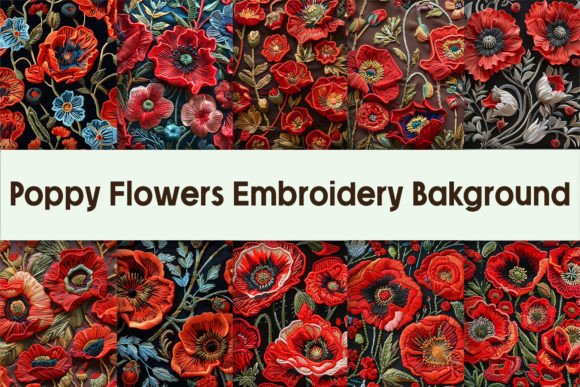
The immediate mood this design evokes is organic and vibrant. Poppies are bold flowers, often associated with remembrance, summer fields, and rustic charm. This particular graphic captures that energy with a layout that feels natural rather than rigidly symmetrical. For an embroidery project, this asymmetry is a double-edged sword. It allows for creative placement on irregular surfaces like tote bags or curved caps, but it requires careful attention to balance when centering on standard garments.
The detail level appears high, which is excellent for digital mockups and wall art, but it raises questions for actual stitching. In embroidery, too much detail can lead to excessive stitch density, causing fabric puckering or thread breaks. As a reviewer, I look at the curves of the petals and the intricacy of the stems and wonder how these will translate into satin stitch or fill stitch applications. The visual personality suggests a piece that would work beautifully for boutique branding or high-end home decor, provided the digitization matches the graphic’s promise.
Real-World Application: The Custom Tote Bag Test
To truly evaluate the Poppy Flowers Embroidery Bakground, I imagined a specific real-life scenario: creating a custom embroidered tote bag for a local farmer’s market vendor. This is a common request for small shop owners and Etsy sellers. The goal is a durable, washable item that looks professional and artisanal.
In this context, the design’s scale becomes critical. A tote bag offers a large canvas, allowing the floral elements to breathe. However, if the design is intended as a background element, it must not overwhelm the primary text or logo. I would likely use this poppy motif as a subtle accent along the bottom hem or as a corner detail rather than a full-center focal point. This approach maintains the handmade product’s elegance without making the bag feel cluttered. For a sweatshirt embroidery project, the same logic applies; placing the flowers off-center on the chest or across the shoulders can create a modern, fashionable look that appeals to younger demographics.
Navigating Fabric and Stitching Challenges
One of the most important aspects of using any new design asset is understanding its limitations. While the Poppy Flowers Embroidery Bakground is marketed for various uses, including POD products and graphic design, its application in physical embroidery requires technical diligence. Here are key areas where caution is needed:
- Fabric Texture and Weight: Delicate fabrics like silk or thin cotton may not support dense floral fills. The weight of the thread can cause distortion. I always recommend testing on scrap fabric first, especially if using a stabilizer that might be too stiff for soft materials.
- Stretchy Materials: If you plan to use this on baby clothes or athletic wear, the stretch of the fabric can distort the flower shapes. A cut-away stabilizer is essential here to maintain the integrity of the design.
- Dark Fabrics: Poppies are often red or orange. On dark navy or black fabric, ensuring sufficient contrast is vital. You may need to adjust thread colors or add a white underlay to make the design pop, otherwise, the details might get lost in the shadows.
- Curved Surfaces: Embroidering on caps or curved pillow covers requires careful hooping. The asymmetrical nature of the poppy design means you must align it perfectly to avoid looking lopsided once the item is worn or displayed.
Commercial Viability and Brand Consistency
For craft business owners and commercial embroidery professionals, the value of a design lies in its versatility and customer appeal. The Poppy Flowers Embroidery Bakground fits well into several niches: holiday embroidery for spring collections, wedding gifts with a rustic theme, or nursery decor for baby embroidery projects. Its organic feel builds trust with customers who appreciate handmade quality over mass-produced prints.
However, since the product description specifies that you receive PNG files rather than native embroidery formats like PES or DST, there is an extra step involved. These high-resolution 300 DPI images are perfect for printable mockups, website banners, and sublimation printing. But for machine embroidery, you would need to digitize these PNGs yourself or hire a digitizer. This is a crucial distinction. If you are an Etsy seller offering digital embroidery files, you cannot simply resell these PNGs as stitch files. You must create the actual embroidery file from the graphic, ensuring proper stitch density and pathing.
Practical Designer Notes for Best Results
Before committing to a large production run or listing a new item in your small shop product line, consider these practical steps:
- Check Licensing: Confirm whether the license allows for commercial use of the final stitched product. Most graphic licenses allow this, but always read the terms to protect your craft business.
- Test Stitch Density: If you digitize the PNG, pay close attention to stitch density. Too many stitches in the petal areas can cause thread breaks. Use a combination of satin stitch for outlines and lighter fill stitch for the centers.
- Color Contrast Testing: View the design in black and white mockups. If the details disappear in grayscale, they will likely lack definition in thread. Adjust your thread colors accordingly to ensure clarity.
- Hoop Size Compatibility: Ensure the scaled design fits within your standard hoop sizes. A 4x4 inch hoop might crop essential parts of the background, while a 5x7 or 6x10 hoop offers more flexibility for layout.
- Stabilizer Selection: Match the stabilizer to the fabric. Use tear-away for stable woven fabrics like cotton twill, and cut-away for knits and stretchy materials to prevent distortion after washing.
Final Verdict on Design Utility
The Poppy Flowers Embroidery Bakground is a strong visual asset for designers who understand the bridge between graphic art and textile creation. It excels in contexts where a natural, flowing aesthetic is desired, such as custom apparel, home decor, and personalized gifts. While it requires technical adaptation for machine embroidery due to its format as a PNG, the high resolution provides a solid foundation for digitization.
For those who prefer ready-to-stitch files, this graphic serves as an excellent reference or base for creating unique applique designs. For digital product sellers, it offers high-quality visuals for marketing materials and shop banners. Ultimately, its success depends on the skill of the user in translating the visual beauty into a durable, well-stitched finished product. With careful attention to fabric choice, stabilizer use, and stitch planning, this design can elevate your embroidery project from simple decoration to a professional-grade handmade item.