Reviewing the Roses Embroidery Seamless Pattern
As a designer who has spent years staring at digitized files and watching needles dance across fabric, I have learned that not every pretty picture translates into a quality stitched product. When I first opened the Roses Embroidery Seamless Pattern, my initial reaction was one of cautious optimism. The visual appeal is undeniable; it carries a romantic, vintage-inspired mood that feels both timeless and fresh. However, seeing a graphic on a screen is vastly different from seeing how those curves and petals behave under the tension of an embroidery hoop.
This review is not just about aesthetics. It is about practical application for those of us running craft businesses, selling on Etsy, or creating personalized gifts for clients. I evaluated this design with real-world projects in mind, considering everything from stitch density to fabric compatibility.
First Impressions and Visual Personality
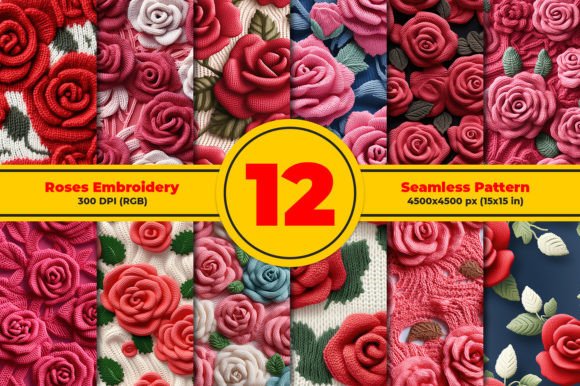
The Roses Embroidery Seamless Pattern belongs to a category of Graphics that prioritize flow and continuity. Unlike isolated motifs, a seamless pattern requires careful planning when applied to embroidery. The roses are rendered with a softness that suggests they would look beautiful as a fill stitch or a combination of satin and running stitches. The layout avoids chaotic clustering, which is a good sign for machine readability.
For embroidery designers, the key question is always: will this look muddy? In this case, the separation between elements seems sufficient to maintain clarity. The design creates a lush, garden-like atmosphere that works exceptionally well for boutique branding or high-end handmade products. It does not scream for attention but rather invites a closer look, which is exactly what you want in a sophisticated finished product.
Real-World Application: The Tote Bag Test
To truly understand the value of this design, I imagined applying it to a custom embroidered tote bag. This is a staple item for many small shop owners and Etsy sellers. Using the Roses Embroidery Seamless Pattern as an all-over print or a large panel design on canvas could elevate a simple bag into a statement piece.
However, there is a catch. Because this is described as compatible with sublimation, digital printing transfers, and screen printing, it is likely optimized for flat, continuous color application. Translating this directly into a machine embroidery design requires careful digitizing. If you are using it as a reference for stitching, you must consider the thread colors. A monochromatic thread palette might lose the depth of the roses, while too many color changes can increase production time and cost. For a sweatshirt embroidery project, I would recommend simplifying the pattern to focus on key floral elements rather than attempting the full seamless repeat, unless you have a multi-needle industrial machine capable of handling complex file data.
Fabric and Stabilizer Considerations
One of the most critical aspects of using any Patterns or Graphics for embroidery is the substrate. This design features intricate details that demand stability. If you are working with thin fabric or stretchy material like jersey for baby embroidery, the risk of puckering is high. You must use a cut-away stabilizer to support the stitch density.
For textured fabrics like terry cloth towels or denim aprons, the small details of the roses might get lost. In these cases, I advise testing the design on scrap fabric first. Check how the satin stitch lays on the texture. If the stitches sink into the pile, the design will lack definition. For dark fabric, ensure your thread colors have enough contrast. A pale pink rose on navy blue works, but a muted mauve might disappear.
Commercial Viability and Customer Trust
For commercial embroidery and craft business owners, the perceived value of the finished product is paramount. A well-executed floral design signals professionalism. When customers see clean lines and consistent stitching, their trust in your brand grows. The Roses Embroidery Seamless Pattern has the potential to enhance buyer engagement because it feels curated and artistic.
However, you must be transparent about the method used. Since the product description mentions compatibility with ink jet transfers and digital printing, some users might opt for print-on-embroidery techniques. If you are selling a handmade product, clarify whether the item is fully stitched or printed. Misleading customers can damage your reputation as an Etsy seller or boutique owner. If you choose to embroider it, ensure the digitizing matches the quality of the original graphic.
Where to Use Caution
Not every project is suitable for this level of detail. Avoid using the full seamless pattern on curved surfaces like caps or hats unless you are isolating specific elements. The distortion caused by the curve can make the roses look stretched or uneven. Similarly, be cautious with small hoop sizes. If you try to cram too much of the pattern into a 4x4 inch hoop, the details will become indistinguishable blobs of thread.
Also, consider the end-use of the item. For products that need frequent washing, such as kitchen towels or baby clothes, dense stitch areas can become stiff. Review the stitch density carefully. If the design is too heavy, it may crack or pull away from the fabric after multiple wash cycles. For holiday embroidery or wedding gifts, where items might be kept as keepsakes rather than worn daily, this durability concern is less pressing, but still worth noting.
Practical Designer Notes
Before you commit to a large production run or list a new item in your shop, follow these steps:
- Test on Scrap Fabric: Always stitch out a sample on the exact fabric you plan to use. This reveals issues with tension and registration.
- Check Thread Color Contrast: View your design in black and white mockups. If the elements blend together without color, the design lacks structural clarity.
- Confirm Licensing: The description mentions various printing methods, but if you are creating a digital embroidery file for resale or using it in commercial embroidery projects, verify the license terms. Ensure you have the right to sell finished items or modified design assets.
- Evaluate Hoop Size: Match the design scale to your hoop. Do not force a large seamless pattern into a small frame without resizing and re-digitizing.
- Inspect Small Details: Zoom in on the petals. Are there tiny, isolated stitches that might cause thread breaks? Simplify if necessary.
In conclusion, the Roses Embroidery Seamless Pattern is a versatile asset for designers who understand its limitations and strengths. It shines in applications where space allows the flowers to breathe, such as tote bag designs, pillow covers, or wall art. With proper stabilizer selection and thoughtful digitizing, it can transform a simple garment into a cherished personalized gift. Just remember that a beautiful graphic is only the starting point; the magic happens in the stitching.